Global Science and Innovation Network
A blog showcasing the work of the Global UK Science and Innovation Network, approximately 90 officers in over 30 countries and territories around the world
About this blog
7th March 2017
Science Innovation USA
A Conversation with Rosie Grayburn, Postdoctoral Fellow at the Getty Conservation Institute In recognition of International Women’s Day, I interviewed a very inspiring female scientist working here in Los Angeles. Rosie’s career illustrates the strong science ties between the US and the UK, as she originally hails from England. Can you tell me a little bit about […]
Read more on From STEM to STEAM: Science and Art Go Hand-in-Hand | Reply
7th March 2017
Science Innovation USA
A Guest Blog by the Women of the Science and Innovation Network Science knows no country because knowledge belongs to humanity and it is the torch that illuminates the world- Louis Pasteur This beautiful quote sums up why networks like HMG’s Science and Innovation Network (SIN) are so important, and why collaborating on science and […]
Read more on Science Belongs to Humanity…Or Does It? | Reply
7th March 2017
Tokyo
Dementia is not an inevitable consequence of ageing…. and yet it is one of the major causes of disability and dependency among older people worldwide. Japan as a society is wrestling with the effects of a rapidly ageing population, where the number of people with dementia is forecast to rise to more than 7 million by 2025. […]
Read more on Involve patients, harness new technologies, share data: future prospects for UK and Japan research partnerships to tackle dementia | Reply
7th March 2017
Delhi, India
Growing up in Australia, like all kids, I was curious and inquisitive about the ‘science’ behind things. Encouraged by a school teacher mother and an engineer father, I coveted a plastic microscope and a chemistry set. But, like many other kids, I lost confidence in my abilities in science and maths. Growing up in India, […]
Read more on Women in STEM: closing the gender gap | Reply
3rd March 2017
Tokyo
Due to its position at the end of the Pacific, Japan is a country that is prone to various natural disasters not only earthquakes and tsunami, but also volcanoes, typhoons, floods and mudslides. When I started work in Tokyo, my first meeting was with the security manager to make sure I was prepared and knew […]
Read more on After the earthquake: sharing experience with Japan on post-disaster mental health support | Reply
16th February 2017
Montreal, Canada
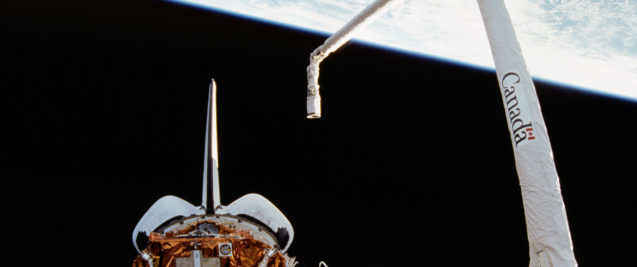
The answer likely isn’t obvious, but both were either discovered or invented by a Canadian researcher. The former relates to the 2015 Noble Prize in Physics awarded to Prof. Arthur MacDonald, whereas the latter is the game invented in 1891 by Dr. James Naismith.
Read more on From Blackberries to basketball: why we work with Canada in science | Reply
10th February 2017
London, UK
At the end of the classic film Casablanca, Rick says to the Chief of Police “I think this is the beginning of a beautiful friendship”. So, as we embark upon a year of UK – Russia Science and (science) Education events, what do we expect our scientific relationship to look like 12 months from now? […]
Read more on UK – Russia Year of Science and Education: the beginning of a beautiful relationship? | Reply (2)
10th February 2017
Beijing

“By 2030 China’s urbanisation rate will have increased from 56% to 70%.” On the face of it the projection doesn’t look that alarming. Yet what it means is another 200 million people moving from the countryside to cities. What has been called history’s largest human migration began in the late 1970s with Deng Xiaoping’s reform […]
Read more on On a Mission | Reply (7)
26th January 2017
Science Innovation USA
The global population is expected to increase by 38% in 2050 from 6.9 billion in 2010 to 9.6 billion in 2050. With our increasing detriment to the environment and a changing climate, this alarming statistic begs the question: how will we feed everyone? Plant phenomics, an emerging science that studies how a crop’s traits change […]
Read more on The Future of Farming: How to Feed the Planet | Reply
18th January 2017
London, UKScience and Innovation Network
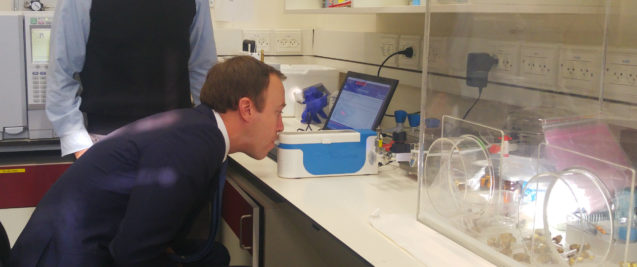
A unique investment in medical research teams up British and Israeli scientists to look for cures to the world’s most challenging diseases One in 500 people in the UK suffer from Parkinson’s disease and 175,000 Brits suffer heart attacks each year. But these numbers may drop significantly in the pretty near future thanks to Britain’s […]
Read more on When Great Minds Think Alike – and Save Lives | Reply (2)