
Chevening Cybersecurity Fellow
Guest blogger for
Part of Girls' Education UK in North Macedonia Women and Girls
2nd December 2025 Skopje, North Macedonia
In cybersecurity, there are no limits – only new voices ready to lead
British Embassy Skopje offers its blog platform for guest posts. The views expressed in the guest posts are those of the authors and are not the position of the UK Government.
Being part of the newly established Cybersecurity Sector in the Ministry of Digital Transformation in North Macedonia has been both a responsibility and a privilege. Contributing to the development of national cybersecurity policies at a time when digital transformation rapidly reshaping our society has shown me how essential it is to build systems that protect people as much as they protect institutions.
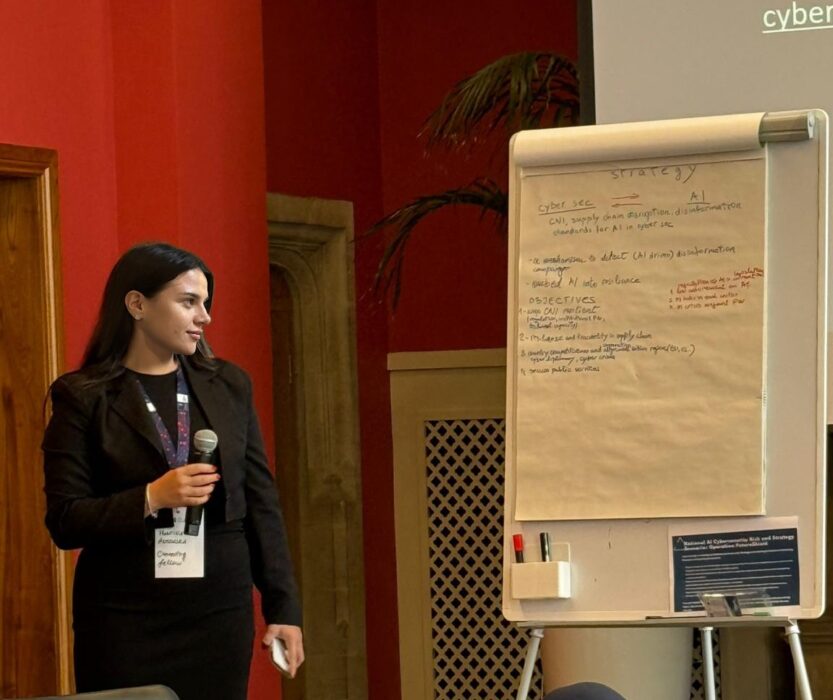
Cybersecurity today is deeply human, it touches everyday life, public trust, and the safety of citizens in ways we often do not immediately see. This perspective became even clearer during one of the most transformative experiences of my career, the Chevening Western Balkans Cyber Security Fellowship at Cranfield University, delivered at the UK Defence Academy. 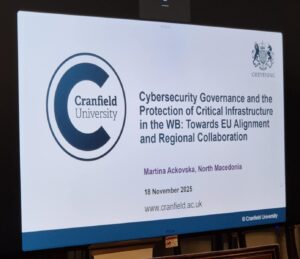
Arriving in the UK for the programme, I joined a diverse group of professionals from across the region, each bringing their own expertise but united by the same goal: strengthening the cybersecurity landscape of the Western Balkans. What began as a learning opportunity quickly became a journey of collaboration, reflection, and shared purpose.
Our sessions with professors and experts offered real-world insights into cyber governance, risk management, and strategic planning. The fellowship also allowed me to delve deeper into a research topic that has guided much of my work: Cybersecurity Governance and the Protection of Critical Infrastructure in the Western Balkans: Toward EU Alignment and Regional Collaboration.
My research grew into a reflection on how interconnected our countries truly are, not only through shared infrastructure, but through shared risks, responsibilities, and aspirations. Strengthening cybersecurity in the Western Balkans requires collaboration, trust,
and a regional approach.
Some of the most inspiring moments took place beyond the classroom. We had the privilege to visit Bletchley Park, Cyber Expo 2025, the Oxford Martin School, the House of Lords, and several leading cyber companies, each offering a unique perspective on the past, present, and future of cybersecurity. These experiences underscored the importance of ensuring that cybersecurity discussions include a wide range of perspectives, particularly the expertise and leadership of women. 
Working in cybersecurity has demonstrated to me how vital it is to involve diverse perspectives in the development of digital policies, risk assessments, and security solutions.
Women contribute valuable perspectives to cybersecurity, offering a clear understanding of how digital systems influence institutions, services, and everyday life.
Their involvement leads to more informed decisions and more effective cybersecurity governance. Modern cybersecurity challenges require a broad set of skills: critical thinking, communication, policy development, coordination, and a human-centered approach. These are areas where women have consistently demonstrated leadership across sectors. Encouraging more women to join the cybersecurity domain is therefore essential for building more resilient institutions and safer digital environments.
Throughout my professional development, I have seen how important it is for younger women to have visible role models. When women are present in technical teams, strategic discussions, and national policy work, they help shape solutions that better reflect societal needs. Their perspectives enhance the way risks are understood and addressed, especially as digital technologies increasingly impact daily life, public services, and national security.
For women considering this path, cybersecurity offers a unique combination of purpose, challenge, and long-term career growth. It is a field where expertise is valued, learning is continuous, and the impact of one’s work is tangible.
Women who enter this profession contribute not only to technical progress, but also to stronger institutions, improved public trust, and a more secure digital future.
I strongly encourage young women and girls to explore opportunities in cybersecurity, whether through education, training programmes, or early professional experiences. The sector needs their skills, their insights and their leadership. With more women involved, our collective ability to protect critical systems, support digital transformation, and advance national resilience will only grow stronger.
For women who want to influence policy, strengthen institutions, and contribute to national resilience, I encourage you to apply for the Chevening Western Balkans Cyber Security Fellowship and be part of the next generation of leaders in this field.