
11th May 2026 London, UK
The Biodiversity Beyond National Jurisdiction Bill: turning a global ocean agreement into UK law
The ocean beyond national jurisdiction covers almost half of the planet, yet until recently it has been one of the least protected areas on Earth. The high seas are home to some of the planet’s most important ecosystems. They help regulate our climate and support global food security.
The Biodiversity Beyond National Jurisdiction (BBNJ) Agreement is a once-in-a-generation international agreement and a historic milestone for ocean governance. It aims to protect marine biodiversity in areas beyond national jurisdiction by creating new tools to establish marine protected areas on the high seas, strengthen environmental impact assessments for deep-ocean economic activity, and ensure that the benefits of marine genetic resources are shared more fairly. The Agreement will be crucial for safeguarding ocean ecosystems and ensuring the sustainable use of ocean resources.
The UK was one of the first countries to sign the Agreement in 2023. However, to ratify it and bring it into force for the UK, we must pass domestic legislation. This is because the UK has a dualist legal system: international agreements do not automatically become part of UK law until legislation is in place to give effect to the treaty’s obligations.
This is where the BBNJ Bill comes in: it provides the legal bridge between the Agreement and UK law. The Bill creates a framework to implement and enforce the treaty in the UK, including powers to regulate activities such as marine genetic resource collection and to require environmental impact assessments for UK actors in areas beyond national jurisdiction. Without this step, the UK would not be able to ratify the Agreement.
I am pleased to say that the Bill has received Royal Assent and is now an Act of Parliament. This brings us another step closer to the UK ratifying the Agreement. To ratify, we now need to put in place secondary legislation over the next few months to ensure the UK can meet its obligations in full under the Agreement.
Once that is completed, the UK can take the final steps to ratify. This includes the Foreign Secretary signing the instrument of ratification and depositing it at UN Headquarters in New York. This formal document confirms that the UK consents to be legally bound by the treaty.
This process will make the UK a Party to the Agreement. Crucially, it will also allow the UK to take part in decision-making at future Conferences of the Parties, working with international partners on core issues such as the recognition and enforcement of marine protected areas in areas beyond national jurisdiction.
BBNJ Bill Parliamentary passage: a view from a Bill Officer
I worked on the BBNJ Bill from its introduction in September 2025 through to Royal Assent in February 2026. This involved supporting the Bill through its parliamentary passage in both the House of Commons and the House of Lords.
One notable aspect of the Bill was the sheer number of stakeholders with an interest in it, from research institutions and universities to industry stakeholders in marine science and biotechnology. High-profile non-governmental organisations (NGOs) also required close engagement by policy and legal teams.
Some stakeholders saw the Bill as an opportunity to raise broader concerns about ocean governance, including issues well outside the Bill’s narrow scope (for example, bottom trawling and plastic pollution). A big part of my role was developing a Bill brief to ensure ministers were aware of key themes and of which topics were out of scope, while maintaining a clear narrative about the Bill’s purpose.
As Bill Support Officer, my role included maintaining amendment-tracking systems, building timelines for the Bill and related work, and producing Q&A packs used by ministers in debates. Although the Bill was FCDO-led, I co-ordinated input across government, working closely with colleagues in DEFRA and DfT who had a number of equities in the Bill. This cross-government coordination was essential for managing amendments, briefing and delivery.
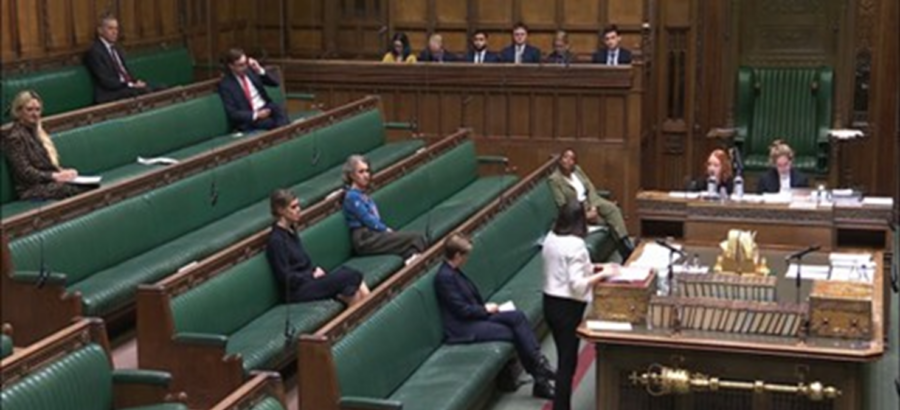
There were numerous day-to-day tasks involved in getting the Bill through Parliament. On parliamentary days, for example, the Bill’s 2nd Reading in the House of Commons, I was lucky to support from the officials’ box, only feet away from where the minister was speaking. I listened for questions from MPs across the House and ensured we provided the minister with timely, accurate lines to include in her speech. It was an intense few hours.
What intrigued me most was the degree of cross-party support for the BBNJ Bill’s aims. Being present in the House for the first time made me realise there was a constructive atmosphere in the House of Commons, which contributed to a smooth and collaborative passage as all parties worked towards the best outcome for the Bill.
The biggest lesson I took away is that Bill work is as much about clarity and co-ordination as it is about legislation. It requires close collaboration between policy and legal teams to resolve technical issues, anticipate urgent questions and manage stakeholder expectations over many months. This sustained, team-wide effort was essential to passing the legislation and helping the UK meet its obligations under the BBNJ Agreement.