
5th November 2026 London
United Nations General Assembly: championing women and girls’ rights
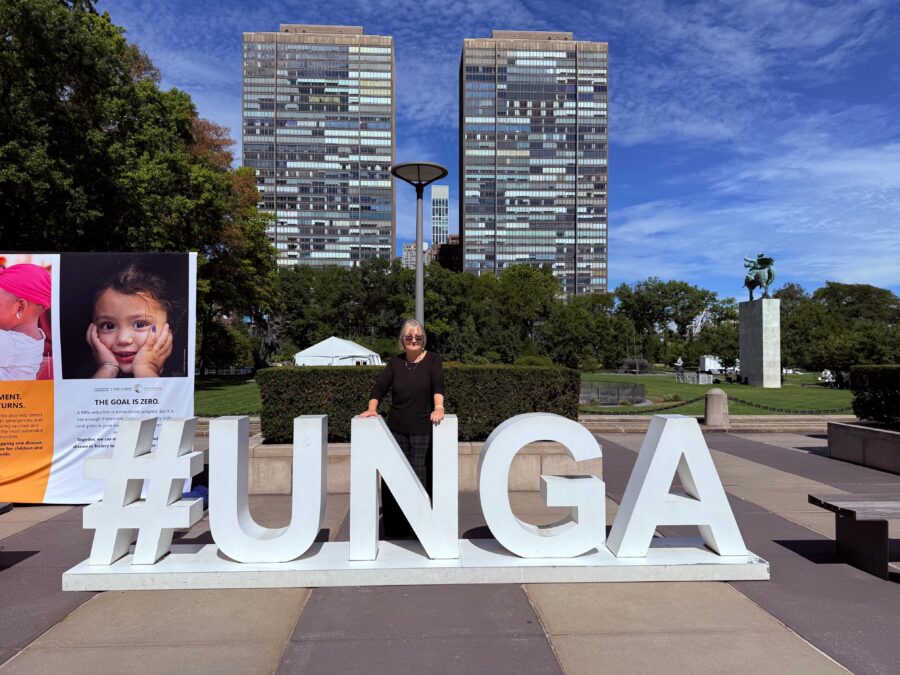
I attended the United Nations General Assembly (UNGA) in New York on 21–22 September 2026. Every year, the UN General Assembly brings together its member states, countries from across the world, to discuss the most pressing global challenges and to work together in pursuit of peace, security and human rights. I was there to make clear the UK’s commitment to working with other countries to promote women and girls’ rights, safety and participation.
Ensuring the multilateral system remains a powerful force for women and girls’ rights
At a time when women’s rights are being challenged in many parts of the world, international cooperation matters more than ever. We need strong international institutions, collective action and countries willing to work together in defence of rights and equality.
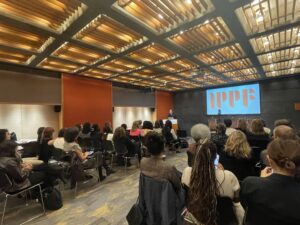
That was the message I took to ‘The Time Is Now: Feminist Leadership for the Next Era of Multilateralism’, hosted by the International Planned Parenthood Federation. Speaking alongside representatives from governments, international organisations and civil society, I made clear the UK’s commitment to multilateralism and to ensuring that the international system remains a powerful force for advancing women’s rights, including sexual and reproductive health and rights.
Standing with Afghan women and girls
Few situations illustrate the urgent need for international action more starkly than the appalling treatment of women and girls in Afghanistan.
At UNGA, I participated in the event ‘Women and Girls in Afghanistan: Five Years of Resistance, Solidarity and the Search for Accountability’ where I heard testimonies and demands from Afghan women for how the international community can better support their rights, promote their participation and hold the Taliban to account.
At the event, I reiterated the UK’s unwavering condemnation of the systematic oppression of Afghan women and girls. Their exclusion from education, employment, public life and decision-making is not only a violation of fundamental human rights; it is a loss for Afghanistan and the wider world.
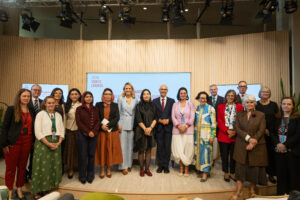
Photo credit: UN Partnerships / Kiara Worth
Women, Peace and Security
In a world facing increasing conflict and instability, the Women, Peace and Security agenda is more important than ever, ensuring that women are recognised not only as those affected by conflict, but as essential participants in preventing and resolving conflict.
The evidence is clear: peace processes are more likely to endure when women are meaningfully involved. Yet women continue to be excluded from negotiations that shape the future of their countries and communities.
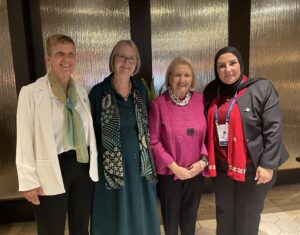
At UNGA, I joined a meeting hosted by Melanne Verveer, Executive Director of the Georgetown Institute for Women, Peace and Security, with representatives from an Israeli organisation, Women Wage Peace, and a Palestinian organisation, Women of the Sun. These organisations are Israeli and Palestinian women working across divides in pursuit of a peaceful future.
Tackling online violence against women and girls
Online violence against women and girls is one of the defining challenges of our digital age. The UK is determined to act. We have committed to halving violence against women and girls within a decade and are taking decisive steps to tackle technology-facilitated abuse, from requiring platforms to remove intimate images shared without consent, to criminalising AI-generated intimate deepfakes and banning AI nudification tools. Internationally, we are working with governments, international organisations and the technology sector to ensure women and girls are safe online.
During UNGA, I met with the First Partner of California, Jennifer Siebel Newsom, to share our respective experiences of developing regulation to make the online world safer for women and girls.
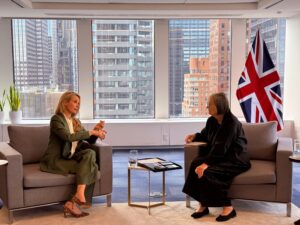
I spoke at a UK event co-hosted with Microsoft and the South-West Grid for Learning focused on confronting image-based abuse and the growing challenge posed by AI-generated harms. At that event, I was pleased to announce new dedicated technical support from the UK for countries seeking to strengthen their policy, legislative and regulatory responses to non-consensual intimate image abuse. Alongside this, I announced a new Tech Safety Challenge, delivered in partnership with Australia’s eSafety Commissioner, UNFPA and the Numan Fund. The challenge will encourage industry partners to develop innovative tools and features to prevent, detect and mitigate non-consensual intimate image abuse, including AI-generated deepfakes.
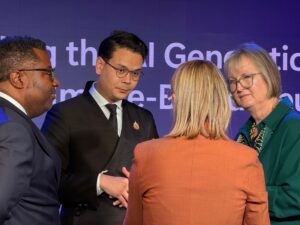
I concluded my visit by taking part in the launch of the All In ‘Safer Tech Safer World’ Report. The report highlights both the scale of the challenge of online violence against women and girls, and the opportunities for governments, industry and civil society to work together to create safer digital spaces.
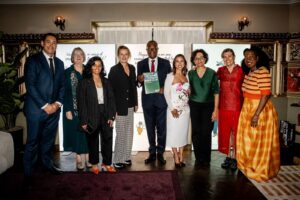
Every woman and girl has the right to live free from violence, discrimination and oppression; to participate fully in her economy, politics and society; and to make the decisions that affect her life. At UNGA, I was proud to reaffirm the UK’s commitment to working with partners across the world to make that ambition a reality.
My thanks to colleagues at the UK Mission to the UN and across the Foreign, Commonwealth and Development Office for their excellent work and support throughout UNGA.