

How societies remember their past says as much about their present as it does about their history. In Serbia, as across the Western Balkans, the legacy of the 1990s remains deeply embedded in public life – shaping political discourse, education, media narratives and the way younger generations understand both themselves and their neighbours. Memory is not neutral. It can divide, harden identities and close space for dialogue. But it can also do something else: it can humanise, connect and help societies move forward without forgetting.
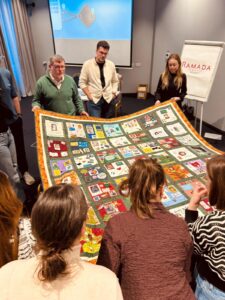

Three decades after the conflicts of the former Yugoslavia, remembrance across the region often remains fragmented and polarised. Competing narratives of victimhood, heroism, and responsibility continue to coexist without meaningful dialogue between them. Too often, memorialisation becomes a site of rivalry rather than reflection, reinforcing divisions instead of helping societies understand the full human cost of war. This is not unique to Serbia, nor is it inevitable.
It is in this spirit that the United Kingdom, through the British Council, is supporting the regional initiative Different Memories, Shared Futures: Towards Inclusive Memorialisation in the Western Balkans. The programme brings together organisations from the former Yugoslavia to explore how remembrance can contribute to learning, civic dialogue, and democratic culture, rather than remaining trapped in zero-sum narratives of the past.
The initiative finds its roots in last October’s meeting of Foreign Ministers from across the region at Hillsborough Castle in Belfast, where the Good Friday Agreement was signed in 1998. The Good Friday Agreement was a watershed moment in bringing to an end the 30 years of violent conflict in Northern Ireland. As the son of a British Army soldier whose family home is in Northern Ireland, it certainly changed my life for the better – and the lives of many thousands of others. It required extraordinary bravery from political leaders on all sides. I am always grateful that they were able to make the hard decisions, not to forget the past, but to recognise their suffering was mirrored within other communities and that they all shared a common interest in moving towards a brighter future.
On the same site, last year, Foreign Ministers including Serbia’s Marko Djurić signed the Hillsborough Declaration. What strikes me as so important about this declaration is the acknowledgement that historical trauma is not unique to any one country or ethnic group, that the conflicts of the 20th century at different times affected all communities. As well as working together to resolve the thousands of open cases of people still missing, the Ministers agreed to support inclusive and respectful commemorations that honour all vicitms of the conflicts.
This initiative is guided by a simple but demanding idea: that remembering is not about choosing one story over another, but about expanding the space of memory to include voices and experiences that have long been marginalised. This includes the experiences of women, whose roles as survivors, peacebuilders and agents of moral courage have too often been excluded. It includes young people, who inherit narratives of conflict without having lived through the wars themselves. And it includes stories of resistance, solidarity and humanity, stories that complicate simplified images of history without denying its violence.
In Serbia, the projects supported through this initiative illustrate what such an approach can look like.
At the academic and youth level, the Institute for Philosophy and Social Theory is leading Shared Future: Youth for Inclusive Remembrance in the Western Balkans. The project brings together students from Serbia and neighbouring countries to study memory, conflict, and dialogue through joint training, field research and collaborative reflection.
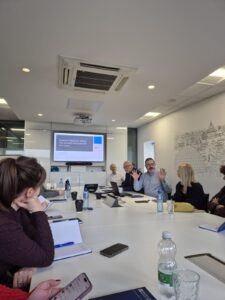

In the cultural sphere, the Association KROKODIL’s project Histoire pour la Liberté 2.0 challenges a question that is central to how societies remember war: who is celebrated, and why? Through multimedia storytelling, public debates, podcasts, exhibitions, and its annual festival, the project foregrounds women, peace activists, and resistance movements whose contributions have been overshadowed by militarised narratives of heroism.
A third project, which is implemented in Serbia and Montenegro, AI Against Femicide (Algorithm of Care) by the organisation ŠkArt, takes a markedly innovative approach. Combining art, feminist ethics and technology, the project asks how digital tools – including artificial intelligence – can be used not to erase or distort experience, but to amplify voices that have been marginalised, particularly those of women affected by violence.
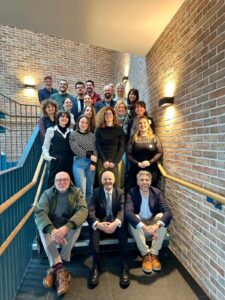

What unites these three initiatives is not a shared interpretation of history, but a shared commitment to humanisation. Each project approaches memory not as a battleground, but as a space for learning.
The United Kingdom’s support for this work is rooted in a long-standing commitment to peace, dialogue, and regional cooperation in the Western Balkans. It also aligns with the objectives of the Berlin Process, which recognises that good neighbourly relations, youth engagement and civic cooperation are essential foundations for stability and prosperity.
At the same time, it is important to acknowledge the sensitivities surrounding memory in Serbia. Remembrance is closely linked to national identity and external involvement can sometimes be perceived as interference. For this reason, the Different Memories, Shared Futures initiative is designed to support local actors rather than to speak on their behalf.
Remembering differently is not about forgetting. It is about recognising that the way we remember shapes the way we live together.