


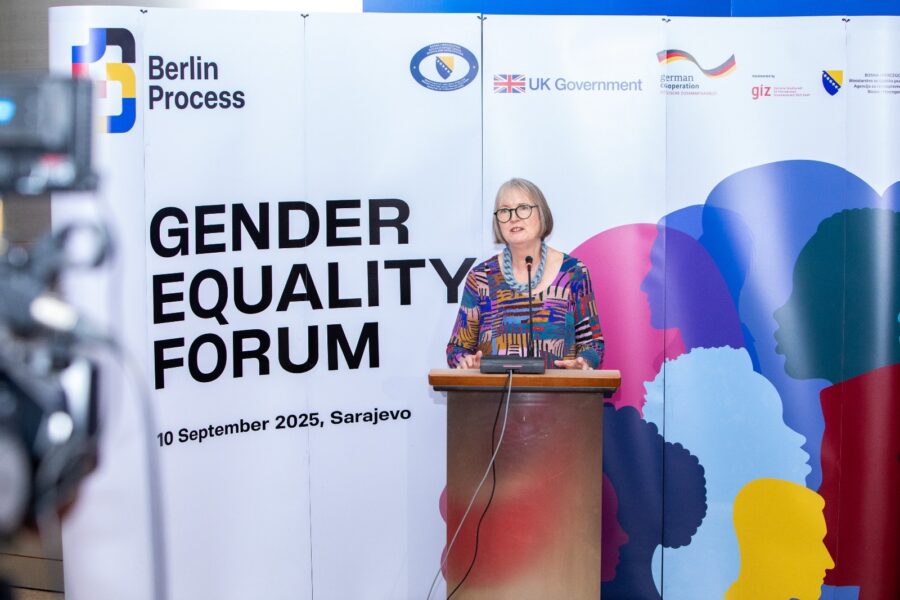
In September, I went on 2 international visits as UK Special Envoy for Women and Girls. The first to Sarajevo in Bosnia and Herzegovina (9 to 10 September) to attend the Berlin Process Gender Equality Forum, and the second to New York (21 to 23 September) to attend the United Nations General Assembly (UNGA).
Women and the Berlin Process
The Berlin Process is an international platform which brings together governments of all 6 Western Balkans countries (Albania, Bosnia and Herzegovina, Kosovo, Montenegro, North Macedonia, Serbia) alongside other European partners. Its aim is to increase regional cooperation, support economic development and accelerate its efforts for closer European alignment in the Western Balkans. The UK will host the Berlin Process Leaders’ Summit in London on 22 October.
I attended the Berlin Process’ Gender Equality Forum on 10 September. This forum is designed to make sure that women and girls’ voices, rights and equality is not treated as a side issue, but rather as a core principle of regional cooperation in the Western Balkans.
I attended the forum alongside Bosnia and Herzegovina’s Foreign Minister Elmedin Konakovic. We discussed the important work being done in Bosnia and Herzegovina to tackle violence against women and girls, and our shared commitment to preventing sexual violence in conflict, promoting women’s economic activity and supporting women’s participation in politics and government.
I delivered a keynote speech at the forum, emphasising women’s role in achieving and maintaining peace and security, and their important role in contributing to our economies. I also participated in a panel on tackling online abuse, where I announced the UK’s support for training civil society organisations in Bosnia and Herzegovina on how to access a pioneering global platform, STOP NCII.org. This platform detects and removes non-consensual intimate images from the internet and empowers women to do that. It is at the frontline of technology.

Women and girls in Bosnia and Herzegovina
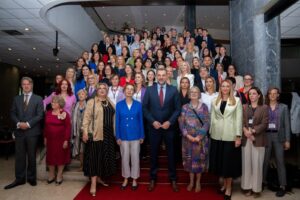
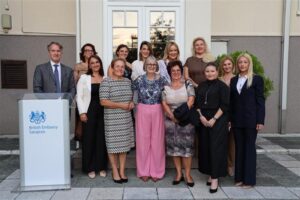
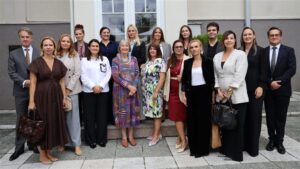
Whilst in Sarajevo, I met with inspiring women leaders from across Bosnia and Herzegovina – parliamentarians, businesswomen, diplomats, public sector professionals, and civil society representatives.
These women, along with male allies, had a wide range of experiences and perspectives on how we increase women’s participation in public life and in the economy. They also reflected on opportunities for greater cooperation among these sectors, to continue women’s progress in Bosnia and Herzegovina, and defend against rollback.

Beijing + 30 celebrations at the United Nations General Assembly (UNGA)

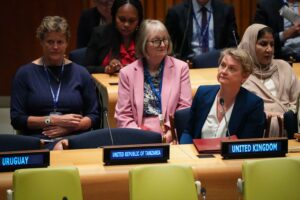
Thirty years ago, the Beijing Declaration and Platform for Action was agreed. This declaration was a landmark international agreement that acknowledged women’s rights as an integral part of universal human rights, and committed governments around the world to taking action in progressing these rights.
To mark this anniversary, the UK Foreign Secretary delivered a statement at UNGA, where she underlined her longstanding personal commitment to women’s equality and rights, particularly to tackling violence against women and girls.
Building my network of women leaders and male allies

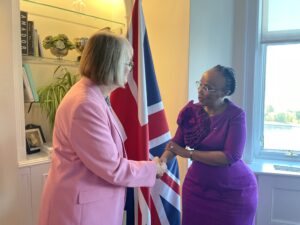
In New York, I expanded my network of women leaders and male allies committed to resisting the rollback of women’s and girls’ rights. This included meetings with ministers from South Africa, Sierra Leone and the United Arab Emirates, several leaders of international women’s networks, and representatives from non-government organisations.
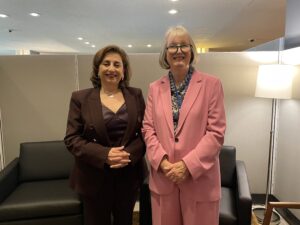
In my meeting with Sima Bahous, UN Women Executive Director, I emphasised the need for the multilateral system to remain a powerful force for the rights and equality of women and girls everywhere.
I also represented the UK at an event hosted by Ukrainian President Zelenskyy and Canadian Prime Minister Carney, giving our full backing to tackling the cruel Russian abduction of Ukrainian children.
I look forward to working with the Foreign Secretary to deliver the ambitions set out in her speech at UNGA – supporting women across the globe to be a part of the decisions that affect their lives, to access education and economic opportunity, and to be free from violence.